When you think about home value, you might spend a lot of time dreaming about a new kitchen or a master bathroom that feels like a spa. While those indoor projects are great, they have one major flaw: nobody sees them until they are already inside your house. If you want to truly boost your home’s value and make a statement in your neighborhood, you have to start at the sidewalk.
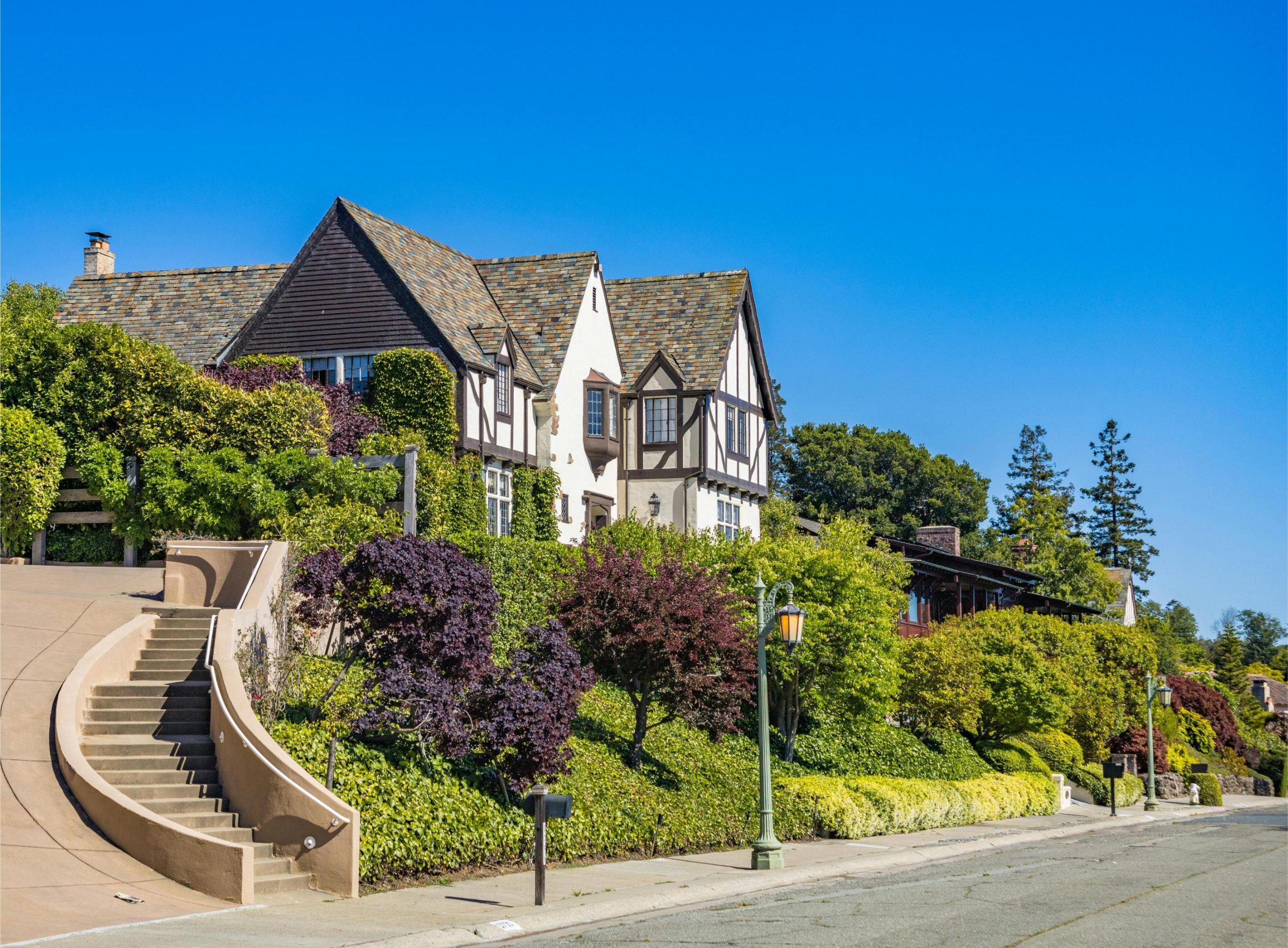
In the world of real estate and home improvement, “Curb Appeal” is king. It is the first impression your home makes on the world. It tells a story about who lives inside and how well the property is maintained. When a house looks expensive from the street, it creates a “halo effect.” This means that people automatically assume the inside is just as beautiful, even before they walk through the front door.
If you are looking for how to make your home look expensive, you don’t need to spend a million dollars on a full exterior remodel. You just need to know the “Curb Appeal Secrets” that high-end designers use to create a luxury look. In this 1,500-word guide, we will look at high-ROI (Return on Investment) projects that will make your home the star of the block.
1. The Power of the “Statement” Front Door
Your front door is the focal point of your entire home. It is where every guest stops and waits. If your door is made of thin, dented metal or has peeling paint, it sends a message that the rest of the house is “builder-grade” or neglected.
- Go Heavy: High-end homes almost always have heavy, solid-core doors. If your budget allows, replacing a standard door with a thick wood or high-quality fiberglass door is one of the best investments you can make. Look for a door with a “heft” to it. When it closes with a solid “thunk,” it immediately feels more expensive.
- The Color of Wealth: You don’t have to stick to white or brown. Many expensive homes use “high-contrast” colors. A deep charcoal, a glossy black, or even a sophisticated navy blue can make a standard home look like a custom estate. If you want a more modern look, a natural wood stain in a light oak or a dark walnut is a classic “luxe” choice.
- Scale Up the Hardware: Don’t use a tiny, cheap doorknob. Luxury homes use oversized hardware. A long, vertical “pull bar” in matte black or brushed gold can make a $500 door look like a $5,000 door.
2. Lighting: The “Jewelry” of the Exterior
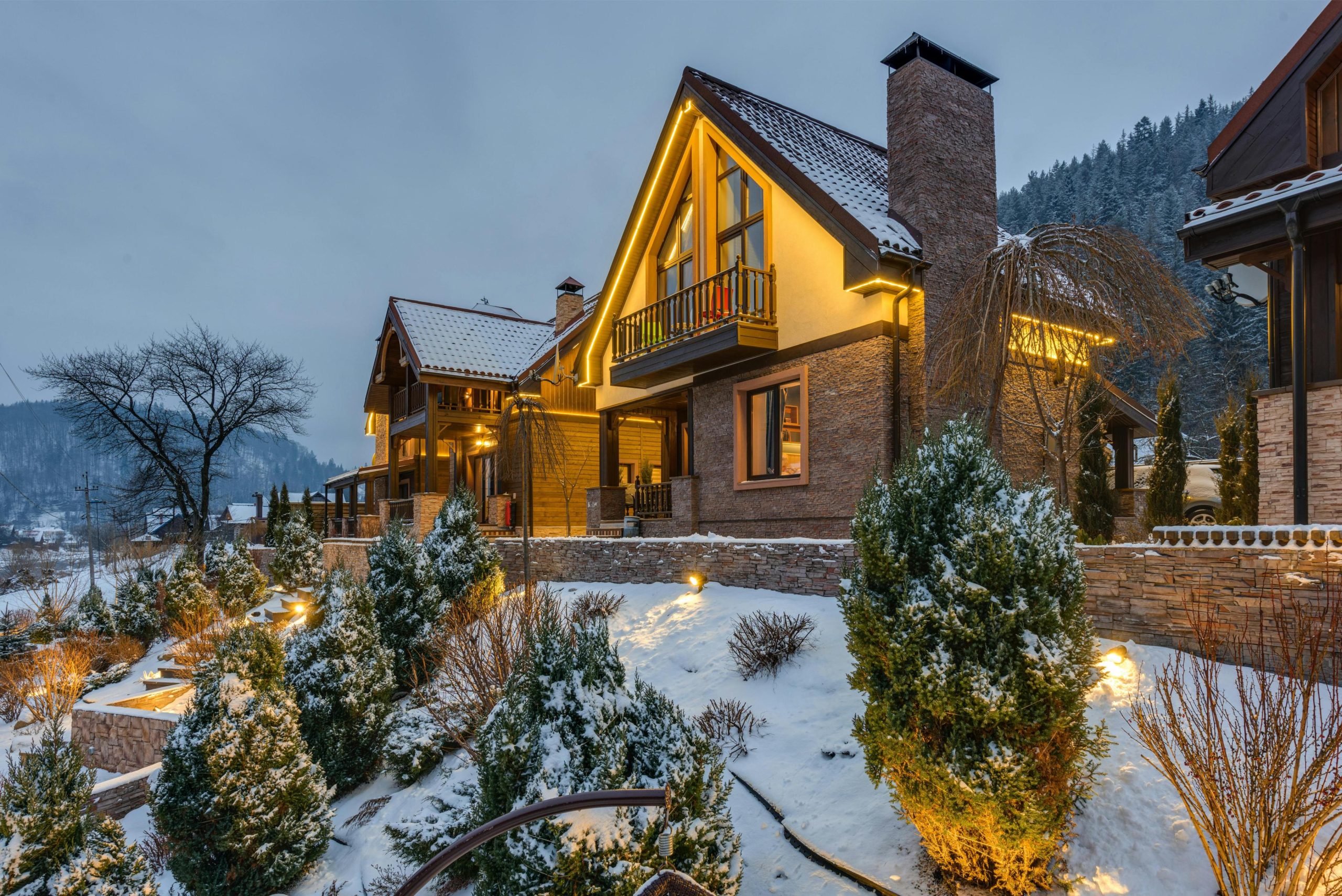
Most people think of outdoor lighting as a safety feature. They want to see where they are walking so they don’t trip. But in high-end design, lighting is used to “paint” the house at night. If your only light is a single “boob light” on the porch and a bright floodlight over the garage, your home will look flat and cheap.
- Layered Lighting: To make your home look expensive, you need layers. This includes “uplighting” on your trees, “wall washing” on the stone or brick of your house, and “path lighting” along your walkway.
- The Fixture Swap: Replace those small, plastic lanterns that came with the house. Look for oversized, designer-grade fixtures. A good rule of thumb is that your porch light should be about one-third the height of your door. When the fixtures are large and made of high-quality materials like brass or copper, they act like jewelry for your home’s “outfit.”
- Consistent Color Temperature: Make sure all your outdoor bulbs are the same color. Aim for “warm white” (around 2700K to 3000K). Avoid the “cool blue” or “bright white” bulbs that make a home look like a gas station or a hospital.
3. House Numbers and Mailboxes: The Details Matter
If you want to know how to make your home look expensive, you have to look at the small details that most people ignore. Your house numbers and your mailbox are tiny parts of your property, but they have a huge impact on perceived value.
- Modern House Numbers: Get rid of those small, stick-on numbers from the hardware store. Instead, look for large, floating architectural numbers. If your home is traditional, choose a classic serif font. If it is modern, go with a clean, sans-serif font. Placing them on a wooden plaque or directly on the stone with a bit of “breathing room” makes them look custom-made.
- The Mailbox Upgrade: If your mailbox is on a wooden post at the end of the driveway, make sure that post is straight and painted or stained. If your mailbox is attached to your house, choose a heavy metal box that matches your door hardware. A cheap, plastic mailbox is a “value killer.”
4. Symmetry and Landscaping
Luxury is often found in order and balance. When you look at high-end estates, the landscaping is rarely “messy.” It is planned and symmetrical.
- The “Framing” Technique: Use matching planters on either side of your front door. Large, black or stone-colored urns with tall “thriller” plants (like boxwoods or cedars) create a grand entrance. This symmetry tells the eye that the home is intentional and well-designed.
- Define Your Edges: One of the cheapest ways to make your home look expensive is to create “crisp” edges. Use a spade or an edger to create a sharp line between your lawn and your garden beds. Add a fresh layer of dark brown or black mulch. This “high-contrast” look makes your green plants pop and looks much more professional than messy, weed-filled dirt.
- Hide the “Uglies”: Every home has them—air conditioning units, trash cans, and garden hoses. High-end homes hide these behind beautiful wooden screens or evergreen hedges. If a buyer can see your trash cans from the street, the “luxury” spell is broken.
5. Windows and the “Internal View”
People don’t just look at your siding; they look into your windows. What they see through the glass is part of your curb appeal.
- Consistent Window Treatments: From the street, every window on the front of your house should look the same. If one window has white blinds, another has wooden shutters, and another has a flowered curtain, the house looks “choppy” and disorganized. Using consistent white or cream linings for all your front-facing windows creates a clean, unified look.
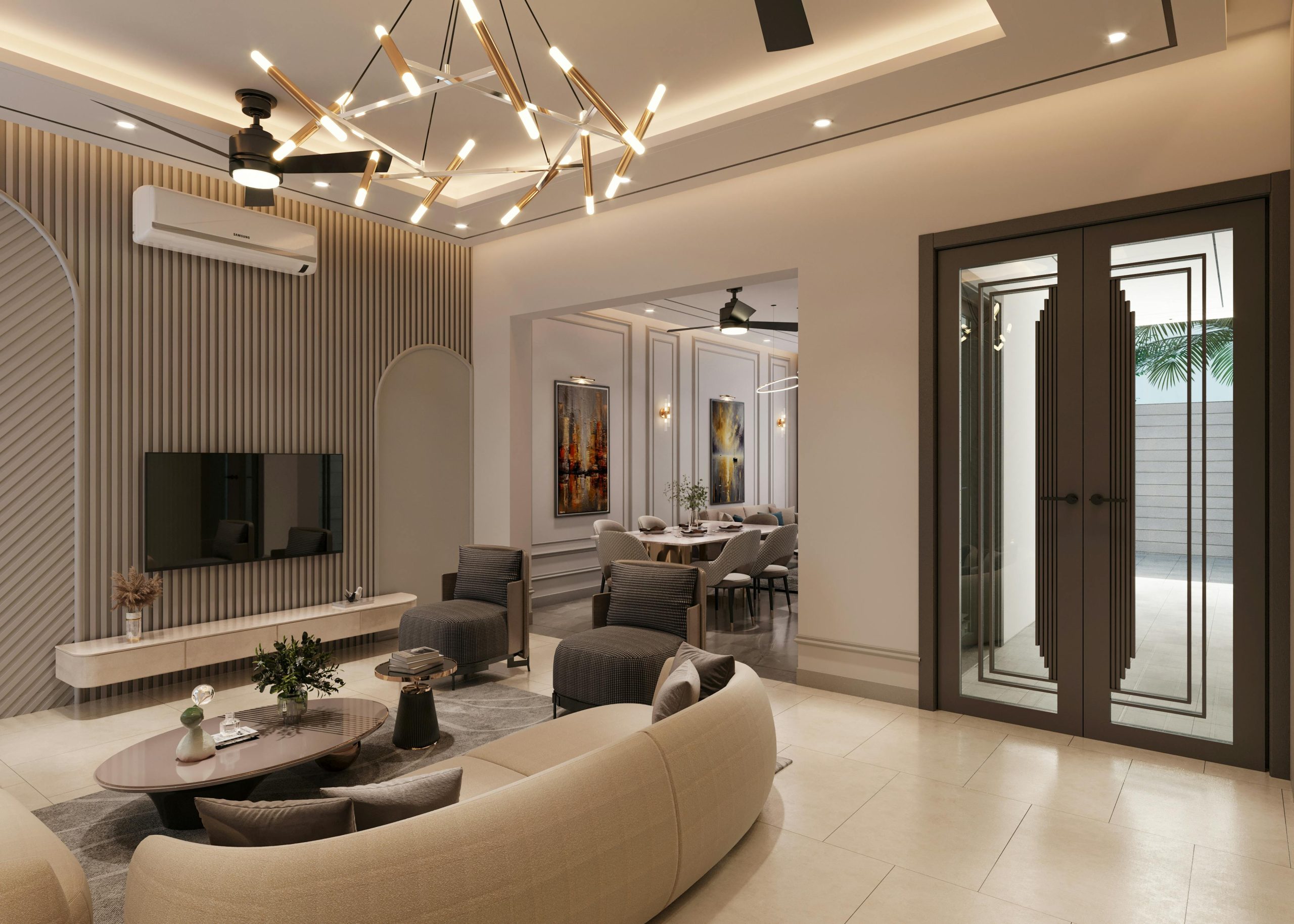
- Luxury Interior Design in the Foyer: This is a secret tip: the room behind your front door is actually part of your curb appeal. If you have a large window over your door or a “sidelight” (the small windows next to the door), people can see into your entryway. Having a beautiful light fixture or a piece of high-end art in that space is essentially part of your luxury interior design plan that works for the outside too. It gives a “sneak peek” of the expensive style waiting inside.
- Clean the Glass: It sounds simple, but sparkling clean windows reflect more light. This makes the house look newer and better maintained.
6. The Driveway and Walkway
The “path” to your home is a physical journey. If that journey involves cracked concrete and oil stains, the “destination” (your home) feels less valuable.
- The Power Wash: You would be amazed at how much “expensive” look is hidden under years of dirt. Power washing your driveway and sidewalk can make the concrete look ten years newer.
- Stone Accents: If you have a standard concrete walkway, consider adding a stone or brick border. This is a high-ROI DIY project. By “framing” your walkway with a different material, you make it look like a custom-designed path rather than a basic slab of cement.
- Resurfacing: If your driveway is in bad shape, resurfacing it is a much cheaper alternative to replacing it. A fresh, dark asphalt driveway or a clean, gray concrete stain makes the entire property look “sharp.”
7. Paint and Siding Maintenance
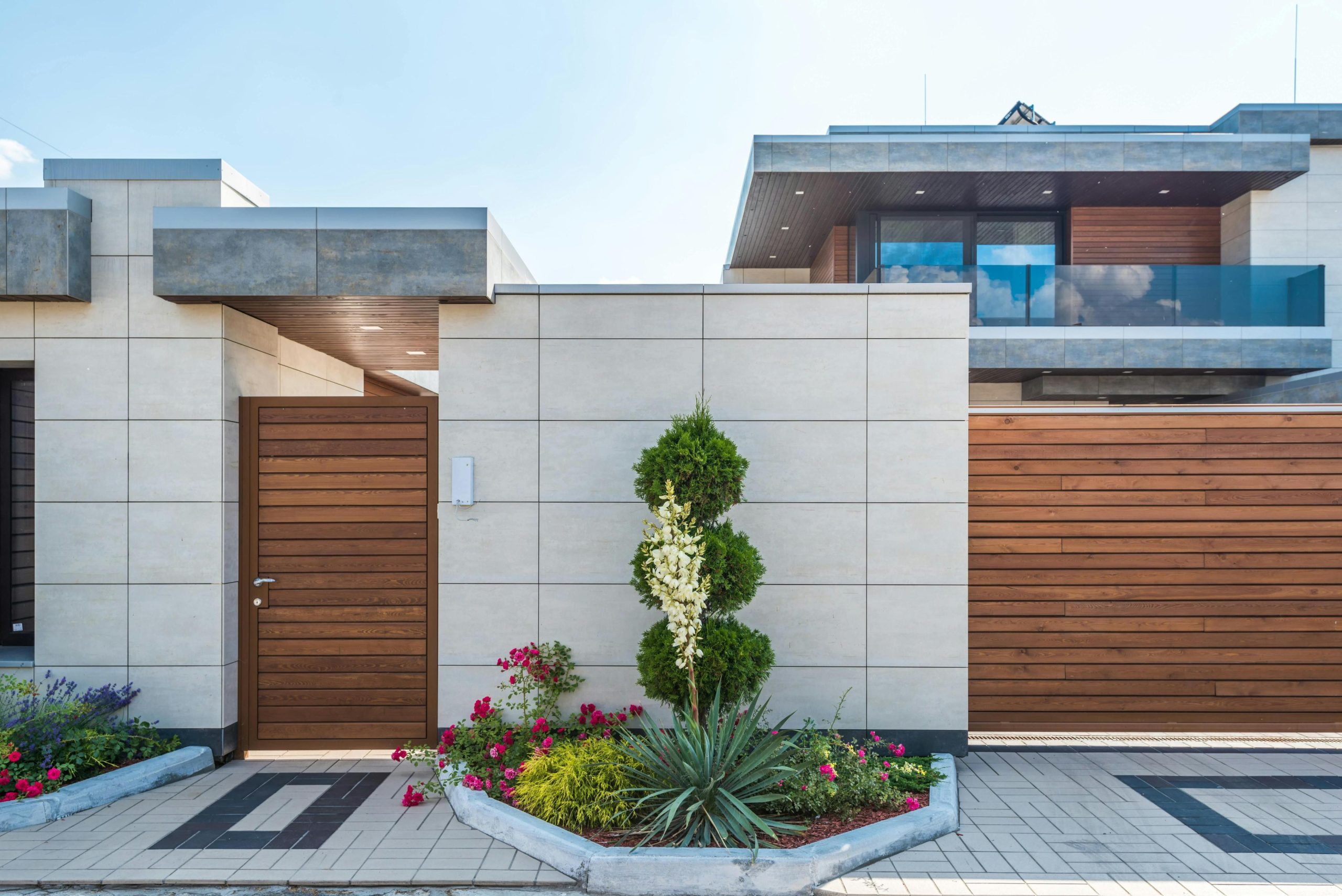
You don’t always need to repaint your whole house to make it look expensive. Sometimes, you just need to “refresh” the parts that have faded.
- The “Trim” Trick: If your siding is in good shape but the house feels “tired,” try repainting just the trim and the shutters. Using a modern, sophisticated color palette—like “Off-White” walls with “Charcoal” trim—can completely change the style of the home for a few hundred dollars in paint.
- Fix the Flaws: Look for “rot” on your window sills or peeling paint on your porch railings. These small “cracks” in the exterior are red flags to the brain. They signal that the home might have deeper problems. Fixing these small issues is a “must-do” before you add any decorative items.
Why Curb Appeal is a High-ROI Investment
In the world of home improvement, we often talk about “Perceived Value.” This is the price someone thinks your home is worth before they ever see an appraisal. When you follow these curb appeal secrets, you are jacking up the perceived value of your home.
Studies have shown that a home with “Excellent” curb appeal can sell for 7% to 14% more than a similar home with “Poor” curb appeal. On a $400,000 house, that is an extra $28,000 to $56,000 in your pocket. Most of the tips in this guide cost less than $1,000 to implement. That is a massive return on your investment!
Conclusion: Your Home’s “Handshake”
Curb appeal is your home’s “handshake.” It is the way your property greets your neighbors, your friends, and potential buyers. By focusing on the “big three”—the front door, the lighting, and the landscaping—you can transform a basic “builder-grade” house into a luxury estate.
Remember, you don’t have to do everything at once. Start with a power washer and a fresh coat of paint on the front door. Add some symmetrical planters and a new set of house numbers. As you make these changes, you will notice that your pride in your home grows along with its value.
Making your home look expensive from the street is about being intentional. It is about choosing quality over quantity and making sure every detail—from the mailbox to the porch light—is working together to tell a story of luxury and care.